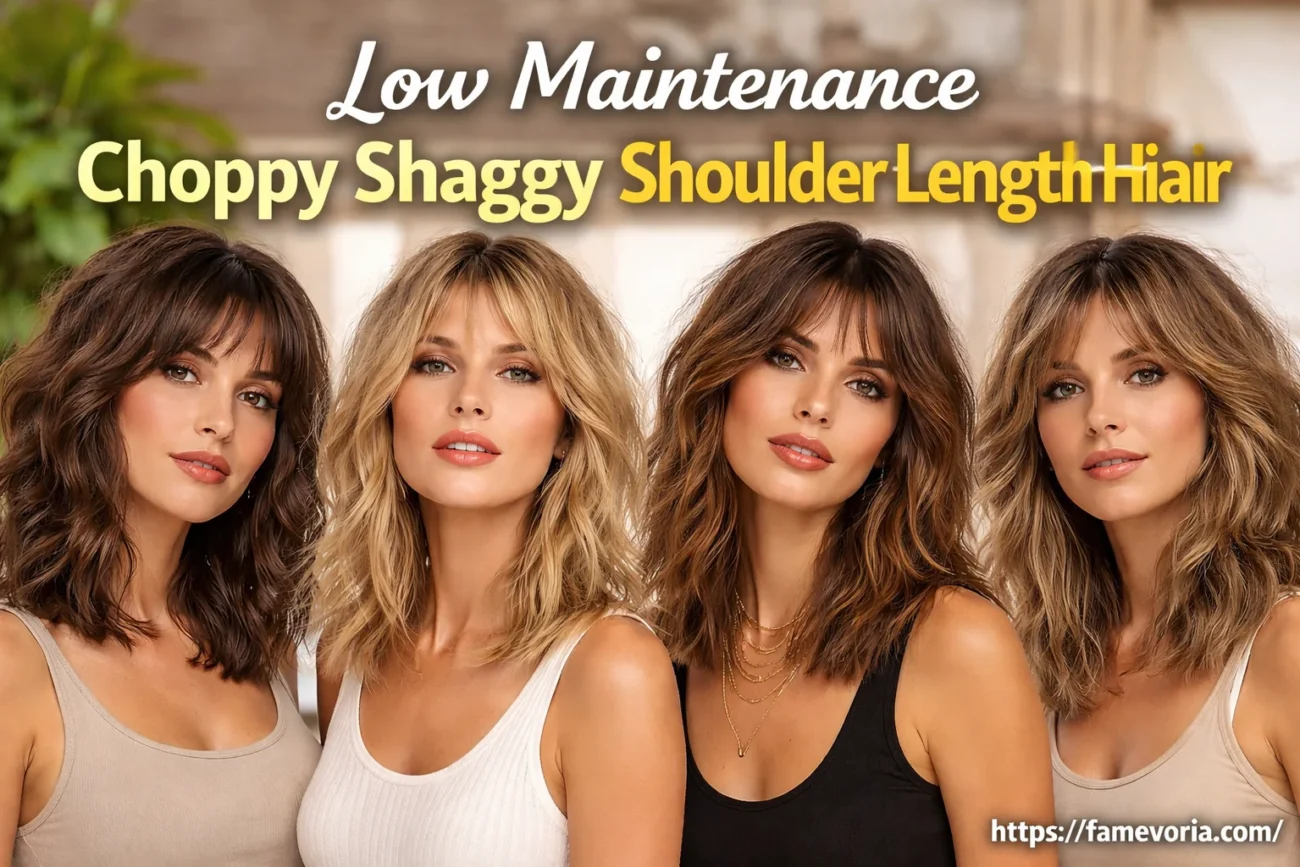
Picture rolling out of bed, running your fingers through your hair, and already looking like you tried. That is not a fantasy. That is what low maintenance choppy shaggy shoulder length hair is actually designed to do.
This cut has been one of the most requested styles in salons for the past two years, and for good reason. It works on fine hair, thick hair, straight hair, wavy hair, and everything in between. It flatters almost every face shape. And when done right, it practically styles itself.
But here is what most guides miss: the difference between a shag that stays beautiful for months and one that falls apart in three weeks comes down to a few very specific decisions, from how your stylist cuts it to which products you use at home.
This guide covers all of it.
What Exactly Is a Choppy Shaggy Shoulder Length Cut?
Before you walk into a salon, it helps to know precisely what you are asking for. A low maintenance choppy shaggy shoulder length cut combines three things:
Shoulder length: The bulk of the hair ends at or just grazing the shoulders, roughly collarbone to mid-shoulder. This length hits what stylists call the “sweet spot” for low effort styling. It is long enough to pull back but short enough to air dry quickly and fall into shape on its own.
Shag structure: This refers to heavy layering throughout the entire length of the hair, including shorter layers at the crown that create lift and volume, and longer graduated layers toward the ends. Unlike a simple layered cut, a shag has significant weight removal throughout, giving it a deliberately undone, lived-in quality.
Choppy texture: This is where the magic lives. Choppy ends are created by point cutting or razor cutting the tips rather than cutting straight across. The result is pieces that separate, move independently, and never look blunt or heavy. This is what makes the style so forgiving. Because the ends are uneven by design, there is no “wrong” way for it to fall.
Together, these three elements create a style that improves with a little messiness and does not require a blow dryer, round brush, or curling iron to look intentional.
Why It Works So Well as a Low Maintenance Style
Most haircuts that look effortless actually require effort to maintain that appearance. The choppy shag at shoulder length is one of the rare exceptions.
Here is why. The layering removes bulk and weight from the hair, which means natural texture becomes more pronounced instead of being weighed down. If you have even a slight wave in your hair, this cut will bring it out. And natural texture is the single biggest shortcut to low maintenance styling.
According to hairstylist Dinah Gacon, owner of Textured Petite Salon, the vital aim of a low maintenance cut is to space out hair care appointments. “Trims are done every 3 to 4 months to maintain the shape of the cut,” she says. “A shag won’t entail tons of work when styling; air drying this cut creates a lived-in finish.”
That 3 to 4 month trim schedule is meaningfully different from the 6 to 8 week schedule most other cuts demand to stay sharp.
The Best Variations: Which One Is Right for You?
Not all choppy shag shoulder cuts are the same. Here are the main variations and which hair types they suit best.
The Textured Shag with Curtain Bangs
This is the most popular version right now. Curtain bangs are soft, parted in the middle, and fall to either side of the face. Unlike traditional blunt bangs, they grow out gracefully, which makes them a genuinely low maintenance addition.
This variation works especially well for people with naturally wavy or slightly wavy hair. The curtain bangs add softness and frame the face, while the choppy layers throughout the length create movement. On a wash-and-go day, a little mousse or sea salt spray into damp hair and a quick scrunch is all this cut needs.
The Bangs-Free Choppy Shag
For people who want the texture and low maintenance benefits of the shag without committing to any kind of fringe, this version relies entirely on face-framing layers. Shorter pieces are cut around the face to mimic the framing effect of bangs, but without the upkeep.
Shoulder-length shags are particularly low maintenance and super easy to style, and the style works especially well with fine hair, where choppy texture creates volume and movement that a heavier cut cannot.
This is the best variation if you have straight hair, since there are no bangs to deal with on mornings when you do not want to style.
The Razor-Cut Shag
A razor-cut shag uses a straight razor instead of scissors to create the layers. The result is softer, more feathered ends compared to scissor-cut choppiness. This version is particularly flattering on thicker hair because the razor removes bulk more effectively while still leaving the shape intact.
The trade-off is that razor cuts can feel drier on very fine or damaged hair. If your hair is on the thinner side, ask your stylist to use point cutting scissors instead of a razor for a similar feathered result with less risk.
The Shag Lob (Shob)
This hybrid sits right at the longer end of shoulder length, sometimes called a long bob or lob base with shag layering added on top. It is slightly more polished than a true shag but still carries enough texture and choppiness to style without heat tools.
The shob is a great bridge option for people who are transitioning from longer hair and want to keep some length while gaining the low maintenance benefits of the shag structure.
Choosing Your Variation Based on Face Shape
This is a section almost every competitor article leaves incomplete. Face shape is one of the most important factors in choosing the right version of this cut, and the wrong layering placement can work against your features rather than with them.
Oval face: Congratulations, you can wear any version. Curtain bangs, blunt fringe, face framing layers, and razor-cut variations all work. The oval face is the most versatile shape for this cut.
Round face: Go for longer face-framing layers that hit below the chin. Avoid heavy bangs that sit across the forehead, as they can make the face appear rounder. Instead, ask for curtain bangs with a deep center part to create the illusion of length. Round faces benefit most from longer layers that create elongation, drawing the eye downward rather than outward.
Square face: Soft, feathered layers around the jaw are your best tool. The choppiness around the face softens angular features. Avoid very blunt or geometric cuts within the shag. The more wispy and textured the framing pieces, the better.
Heart-shaped face: You have a wider forehead and a narrower chin. Ask for more volume and weight at the ends to balance the narrower bottom of your face. Curtain bangs can also work beautifully here by softening the forehead width. Avoid cuts that are heavy at the crown and thin at the ends.
Long or oblong face: Straight bangs or heavier fringe can add width and reduce the appearance of length. Layers that add width at the sides rather than falling straight down will also help balance the proportions.
What to Tell Your Stylist: Exact Salon Language
Walking into a salon and saying “I want a choppy shag” can mean different things to different stylists. Using specific language gets you much closer to the result you want on the first try.
Here is what to ask for:
“I want a shoulder length shag with choppy layers throughout. Please use point cutting or razor cutting on the ends to create texture. I want shorter layers at the crown for volume and lift, and longer graduated layers through the mid-lengths and ends. Keep the overall length at the shoulder. I do not want a lot of blunt weight at the bottom.”
If you want curtain bangs: “Please add soft, face-framing curtain bangs that part in the middle and fall to the sides of my face.”
If you want it especially low maintenance: “I air dry most of the time, so please cut it in a way that looks intentional without heat styling.”
And one critical warning from stylists: there is a fine line between “texture” and “thinning.” If your stylist gets too enthusiastic with the shears, the cut may look amazing in the chair but feel “puffy and bubble-like” after a few weeks. Ask your stylist to control the placement of texture so the cut can grow out and evolve together beautifully.
Styling a Choppy Shaggy Shoulder Length Cut: Hair Type by Hair Type
Fine or Thin Hair
Fine hair benefits most from this cut because the layers create the illusion of volume and thickness. Your styling goal is lift and separation.
Apply a lightweight volumizing mousse to damp hair from roots to ends. Scrunch gently and air dry, or diffuse on low heat. Avoid heavy creams or oils on fine hair, as they will weigh the layers down and eliminate the texture that makes this cut work. Applying a sea salt spray enhances the natural texture of wavy hair, while a mousse volumizes thin hair and minimizes frizz.
On dry hair, a small amount of texturizing powder at the roots adds instant lift without any heaviness.
Thick or Heavy Hair
Thick hair needs products that control and separate rather than add volume. After washing, apply a medium-hold styling cream through the mid-lengths and ends, scrunching to encourage the choppiness to separate.
If your thick hair tends toward frizz, a small amount of lightweight oil or serum on the ends after drying will calm flyaways while keeping the texture intact. Avoid anything labeled “smoothing” or “anti-frizz” that also promises to “seal” the hair, as this can flatten the layers.
Wavy or Curly Hair
This is arguably where the choppy shoulder length shag looks its absolute best. The layers work with your natural wave or curl pattern rather than fighting it.
Apply a curl cream or styling gel to soaking wet hair, scrunch thoroughly, and air dry completely before touching. Disturbing wavy hair while it is still drying breaks up the wave pattern and creates frizz. Once fully dry, gently scrunch out any crunchiness from the gel with your palms.
Straight Hair
The choppy shag on straight hair creates a cool, slightly edgy look with a lot of movement. To enhance the texture on wash days, apply a light sea salt spray to damp hair and scrunch before air drying. This creates a gentle, piece-y separation in the layers rather than having everything lie flat.
The Products That Make This Cut Work
You do not need a full shelf of products. Three items cover almost every situation.
A sea salt or texturizing spray: This is the workhorse product for this cut. Applied to damp or dry hair, it enhances texture and keeps the choppy layers separated and airy without any stiffness.
A lightweight mousse or volumizing foam: For fine hair especially, mousse applied to damp hair before air drying creates the root lift and body that keeps the shag from falling flat.
A dry shampoo: Dry shampoo absorbs excess oil on the scalp, reducing hair greasiness. On days you skip shampooing, applying dry shampoo and massaging it into the scalp maintains the look of the shag. It also adds a subtle grip to the hair that actually enhances the texture of the layers on no-wash days.
How to Maintain This Cut Between Salon Visits
The 3 to 4 month trim schedule is one of the real selling points of this style. But a few habits keep it looking fresh in between visits.
Deep condition every 2 to 3 weeks to keep the ends hydrated. Choppy, point-cut ends are thinner at the tip and can dry out faster than blunt cut hair. A hair mask applied from the ears down for 10 to 15 minutes before shampooing makes a noticeable difference in how the ends behave.
Avoid brushing dry layered hair with a paddle brush. Use a wide tooth comb or simply finger-comb to preserve the texture and separation in the layers. Brushing redistributes the layers into a uniform mass and works against the whole point of the cut.
If you notice the crown layers starting to lose their lift and the cut beginning to feel heavy, book a trim. The crown layers are the first part of this cut to “fall out” as the hair grows, and a quick dusting at the top restores the volume and shape without sacrificing length.
Time to Book That Appointment
Low maintenance choppy shaggy shoulder length hair is not just a trend. It is a practical, everyday solution for anyone who wants to look styled without the daily effort that most cuts demand. The key is getting the cut right in the salon, choosing products matched to your hair type, and letting the texture do the work for you.
Take this guide with you when you book. Screenshot the salon language section. Show your stylist a photo of the variation that matches your face shape. Then trust the cut to do what it was designed to do.
Your best hair days might start with doing a whole lot less.