
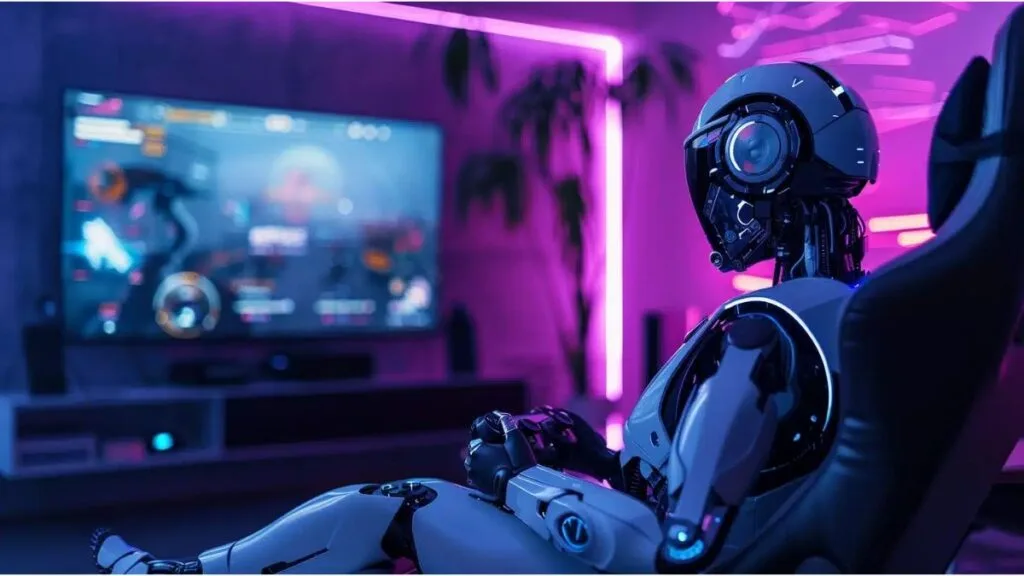
If you have ever played a game where the music seemed to respond to your every move, you may have already experienced what harmonicode video games are all about. This emerging style of game design is changing the relationship between players and sound in ways that traditional game music never could. Whether you are a gamer curious about the concept, a developer looking to learn more, or just someone who stumbled across the term online, this guide explains everything clearly and completely.
By the end, you will know what harmonicode video games are, how they work, why they matter, and what the future holds for this exciting space.
What Are Harmonicode Video Games?
Harmonicode video games are games where music is not just playing in the background. Instead, the music actively responds to what the player does. Actions like moving, fighting, solving puzzles, or exploring new areas change the soundtrack in real time.
The word “harmonicode” comes from two ideas: harmony, which refers to the structure and emotion in music, and code, which refers to the programming systems that generate and control that music. Together, they describe a design philosophy where the harmonic structure of a game’s soundtrack is driven by algorithms and player behavior.
In a traditional video game, a composer writes fixed music tracks that loop and repeat. You hear the same battle theme every time, no matter how well or poorly you are playing. In a harmonicode video game, that same battle theme might grow more intense as you take damage, shift to a triumphant melody when you land a great combo, or soften into ambient tones when you stop and explore.
How Harmonicode Video Games Work
Understanding harmonicode video games becomes much easier once you break down the core systems behind them.
Procedural Music Generation
At the heart of harmonicode video games is procedural music generation. Instead of pre-recorded tracks, the game’s audio engine creates music on the fly using a set of coded rules. These rules define things like chord progressions, rhythmic patterns, tempo ranges, and which instruments should play in different situations.
The system listens to what is happening in the game and feeds that information into the music engine. The result is a soundtrack that always fits the moment without anyone manually composing it.
Real-Time Adaptation
The key feature that separates harmonicode video games from standard games is real-time adaptation. The music does not wait for a natural break or a scene change to shift. It responds instantly.
For example, in a stealth game built with harmonicode principles, the music might be quiet and tense while you are hiding. The moment an enemy spots you, the tempo increases, the bass line kicks in, and the mood becomes urgent. When you escape and find safety again, the music does not cut out abruptly. It gradually winds down, returning to that quiet, tense atmosphere. These transitions are seamless because the system understands the harmonic rules needed to move smoothly between musical states.
Algorithms and Harmonic Rules
The word “harmonicode” specifically highlights the harmonic side of music. Pure procedural systems sometimes generate music that sounds random or disconnected. Harmonicode systems use structured harmonic rules drawn from music theory, like how chord progressions work, which notes belong to which key, and how melodies should move between phrases.
This keeps the music coherent and emotionally resonant even while it changes. A player might not be able to explain why the music feels right during a tense moment, but the harmonic rules behind the scenes are doing exactly that job.
Why Harmonicode Video Games Matter
This is not just a clever trick for audio engineers. Harmonicode video games change the entire player experience in meaningful ways.
Deeper Immersion
Music is one of the most powerful tools for creating emotion. When the soundtrack actively mirrors your in-game actions, the line between player and character blurs. You feel the tension. You feel the triumph. The audio becomes a second language the game uses to communicate with you directly.
Research in game design consistently shows that audio feedback increases emotional investment. Games with dynamic audio keep players engaged longer than those with static soundtracks.
No Two Playthroughs Sound Alike
In a traditional game, every player hears the same music at the same moments. In harmonicode video games, every player creates a slightly different audio experience based on their individual choices and playstyle. This adds genuine replay value. Even if you know a game well, the next playthrough will sound different, keeping the experience fresh.
Music as a Gameplay Mechanic
In some harmonicode video games, music is not just a response to gameplay. It becomes part of the gameplay itself. Players might need to match the rhythm of the music to succeed, or their actions might serve as instruments that collectively build a composition. This creates a type of game that teaches musical intuition through play without ever feeling like a lesson.
Real Examples of Harmonicode Principles in Action
Several well-known games already use ideas that align closely with harmonicode video game design. Looking at these examples helps make the concept concrete.
APE OUT
In this acclaimed indie game, players control an escaped ape while a jazz drummer generates a live soundtrack in real time. Every action, including punches, throws, and crashes, contributes to the rhythm. The music is literally being played by your gameplay. This is one of the clearest examples of a game where the player is both gamer and composer.
No Man’s Sky
This space exploration game uses a generative music system that creates unique soundscapes for every planet. The music responds to the environment, the time of day, and the player’s situation. No two planets sound alike, and no two visits to the same planet feel musically identical.
Crypt of the NecroDancer
This roguelike dungeon crawler requires players to move and attack in sync with the beat of the music. The music drives gameplay, and gameplay is inseparable from music. It is a game where failing to keep rhythm results in real in-game consequences.
Audiosurf
This game turns your own music files into playable racing tracks. The rhythm, tempo, and structure of a song you choose determine the shape and difficulty of the course. The player’s music library becomes the game content itself.
Harmonicode Video Games vs. Traditional Rhythm Games
A common question people ask is how harmonicode video games differ from traditional rhythm games like Guitar Hero or Dance Dance Revolution.
Traditional rhythm games give you a fixed song and ask you to keep up with it. You follow the music. Harmonicode video games flip this relationship. The music follows you. Your actions, choices, and behavior shape the soundtrack in real time.
Traditional rhythm games test your reaction speed. Harmonicode video games create an audio environment that evolves with you. They can apply harmonicode principles to any genre, including action games, exploration games, role-playing games, and even puzzle games, not just music-focused titles.
The Role of AI in Harmonicode Video Games
Artificial intelligence is becoming a powerful tool for expanding what harmonicode video games can do.
AI systems can analyze how a player behaves over multiple sessions and adjust the harmonic structure of the soundtrack accordingly. A player who tends toward aggressive, fast-paced play might hear music that leans into energy and intensity. A player who explores slowly and carefully might hear something more ambient and reflective.
AI can also generate entirely new musical material in real time rather than rearranging pre-composed building blocks. This means future harmonicode video games could produce music that no composer ever wrote, entirely original to each player and each moment.
Some experimental systems are beginning to use biofeedback, where the game reads data like a player’s heart rate or stress levels and uses that information to guide the soundtrack. This represents an even more personalized version of harmonicode principles.
Challenges Developers Face
Creating harmonicode video games is not simple. Developers and composers face real technical and creative challenges.
Computational cost: Generating music in real time requires processing power. On lower-end devices or mobile platforms, this can strain the hardware, making optimization a critical part of development.
Keeping music coherent: Without careful harmonic rules, procedural music can sound random or clashing. Ensuring that the generated music always sounds intentional and emotionally appropriate takes a deep understanding of both music theory and game design.
Composer workflow: Traditional game composers write finished pieces. In harmonicode video games, composers must instead create flexible musical frameworks and building blocks that an algorithm can assemble. This is a fundamentally different creative process that requires learning new tools and thinking differently about music.
Latency: Music must stay in sync with fast game events. Even a small delay between a player action and the musical response breaks the illusion and reduces immersion.
The Future of Harmonicode Video Games
The potential ahead for this space is genuinely exciting.
Virtual reality and augmented reality are natural homes for harmonicode principles. In immersive environments, a soundtrack that responds to where you look, how you move, and what you interact with adds a layer of realism that static audio simply cannot match.
Multiplayer experiences offer another frontier. Imagine a cooperative game where each player represents a different musical instrument. Working together does not just complete objectives but also creates harmonic music. Poor teamwork might result in discordant sound, while great coordination produces something genuinely beautiful.
As AI tools become more powerful and accessible, smaller indie developers will be able to build sophisticated harmonicode systems without needing large teams or huge budgets. This could open the genre to a wave of creative experiments from developers who have never had the resources to attempt this before.
Conclusion
Harmonicode video games represent one of the most exciting directions in modern game design. By making music an active, responsive part of the experience rather than a background decoration, they create something genuinely new: games that listen to you as much as you play them.
Whether you are a player looking for a richer experience, a developer interested in building something innovative, or simply curious about where gaming is heading, the harmonicode approach deserves your attention. The games are already here in early form, and they are only going to get more sophisticated as AI, better tools, and more developer interest push the concept forward.